
Future Minds Conference at the London School of Economics
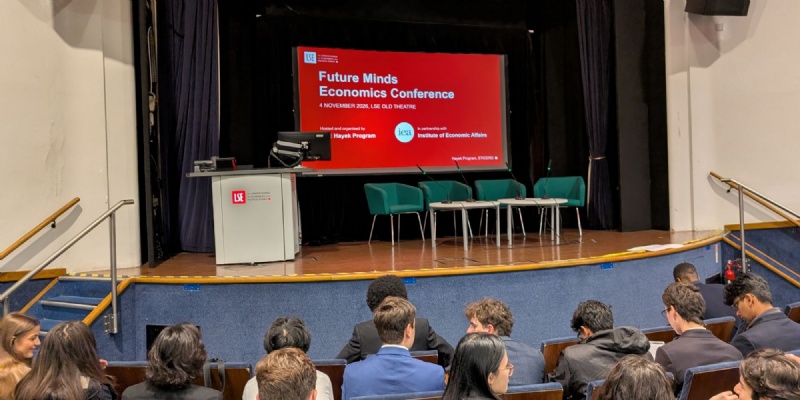
It was wonderful to be able to experience the Future Minds Conference (morning session) at the London School of Economics.
The debates were very substantive and were constructive towards my personal understanding of the current political economy. All speakers made points on inequality and development from a very similar perspective on capitalist ideas, which made for an intense dispute between fellow students who had differing perspectives on the matter (socialist side). In particular, I found Daniel Hannan’s (one of the speakers) discussion on inequality very controversial and interesting as he, alongside the majority of the speakers, believed that the poor working conditions in Third World countries is not an issue, yet key towards the respective country’s development and the improvement of the quality of life of citizens. The speakers argued that industrial work in these conditions is a great improvement from previous, labour-intensive primary sector work that citizens were doing (e.g. Farming). Although I do not fully agree with this, their points have allowed me to look at these issues from different perspectives, which has further widened my understanding of these economic and political problems in the current world.
Overall, the conference was an amazing experience, not only allowing me to visit one of England's most prestigious universities but also giving me crucial information from highly educated and experienced speakers.
Adi Dunca, Year 12
I was extremely grateful for the opportunity to attend the Future Minds Conference (evening session) at the London School of Economics, directed by Dr Bryan Cheang.
The conference gave me the chance to gain valuable insight from individuals who had direct, first-hand experience in business, politics and economics, including a student from Bexley Grammar School.
One particularly memorable speaker was Lord Agnew, who discussed his experiences of investing in numerous businesses. Of the approximately 70 businesses, around 50 eventually failed, leaving only a handful operating. He notably mentioned that we haven’t truly experienced economic growth in our lives ever since 2010, since the UK economy had sustained little growth. He further drew attention to the rising economic debt where he quoted that the UK debt stood at approximately £3.06 trillion today, almost three times the debt of 2010.
What particularly struck me the most was the fact that the prolonged economic stagnation had become our new normal, especially for those born from 2010 onwards, whereas older generations remember a time when economic growth was being experienced in day-to-day lives. This sparked a debate with my classmate about how the economic environment in which we grow up shapes our expectations of the future.
We also heard from a former BGS student, Joanne, who openly criticised Labour and Reform for the idea of governing with no plans while defending her own political views of conservatism. It was interesting to hear a former student confidently engage with the political issues of today. On the whole, I was blessed to have gone on the trip which gave me a chance to not only visit the prestigious university in person but to also broaden my perspective and general understanding of the world today.
Dinoj Arulnanthi, Year 12