Royal Society of Chemistry ~ Top of the Bench Competition
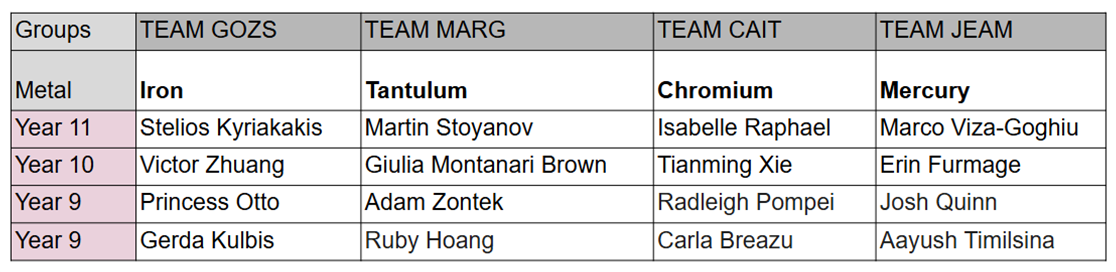
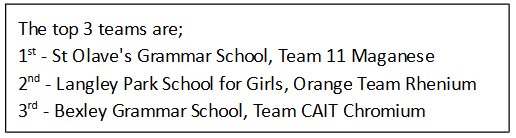
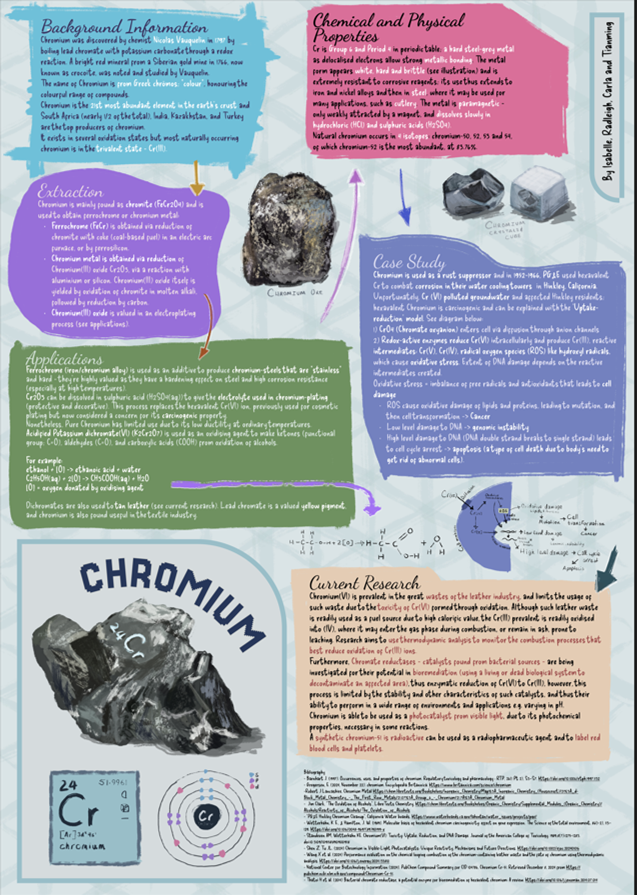
Four teams completed the Royal Society of Chemistry, Top of the Bench Competition task. The teams were asked to create a poster on a Transition metal. Three of the teams were selected to be entered. Their entries are below.
Dr Numbrere-Nmaju, Science Department

RSC TOTB Competition ~ 2024/2025
Articles:
This competition was certainly a valuable experience, I believe: to form a team, partaking in research, writing and design, and to produce something is great. In spite of a group dilemma of transition metals to choose from - with some unusual suggestions, much like throwing darts at the periodic table, there seem to also be many choices that are interesting, rather important in daily life and specific applications, extraordinary in properties, or relevant to the future, and even a combination of these. It was certainly enlightening to learn, through our investigation and presentation of a transition metal, of the extent and application of chemistry, and to delve into the subject which I find myself often fascinated by. Teamwork was also valuable, as we were all eventually tasked with our areas of research, and in simultaneously iterating and criticising our design ideas, we also linked all of our ideas together, both in presentation and understanding. The aspect of design was also a dilemma, but the result was resolved and enthusiastically completed.
Tianming Xie, Year 10
 I am truly proud of what my group has accomplished within and outside the bounds of this poster: improved organisation, collective research, and great teamwork. This poster is one collection of our communication put into words and illustrations, but overall, our knowledge of chemistry has improved tremendously (to the point where we couldn't fit all our research on the poster!)
Great work everyone!
Isabelle Raphael, Year 11
Leader of the BGS winning group
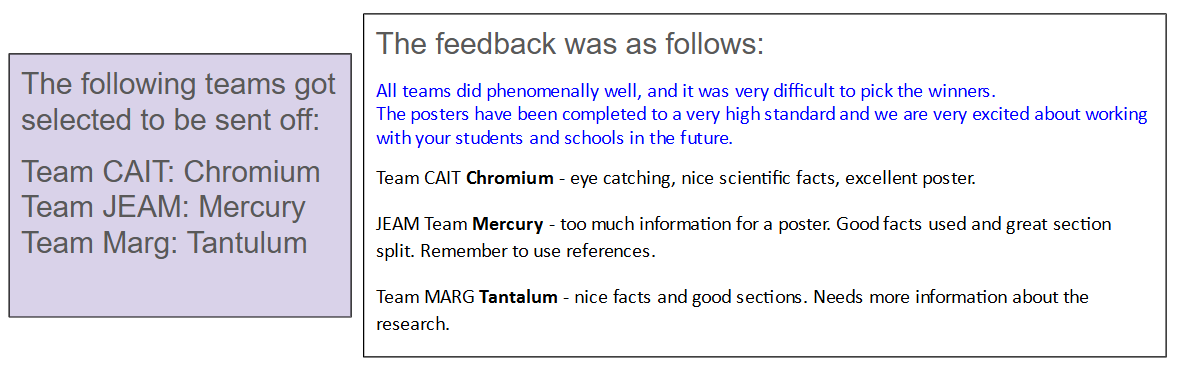

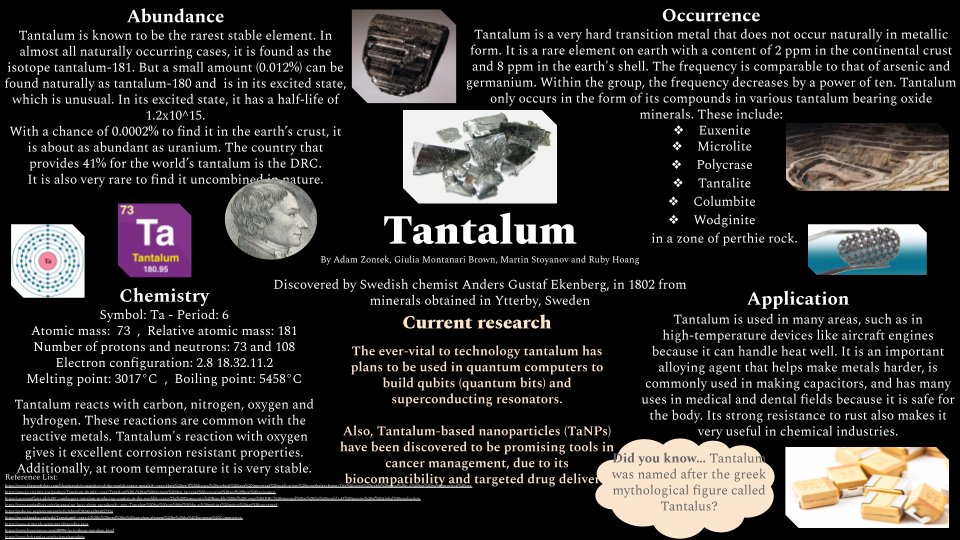
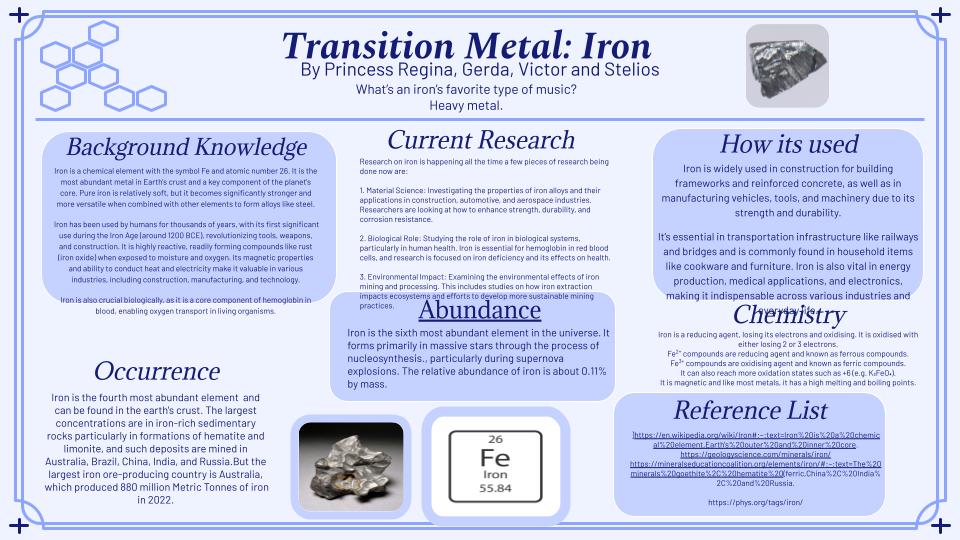

Winning Poster

.jpg)
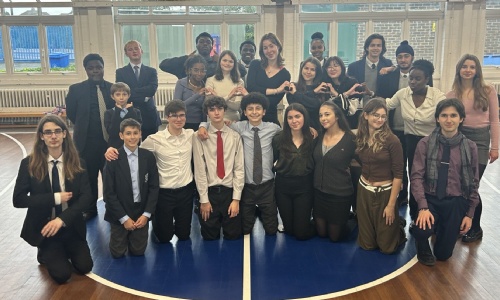
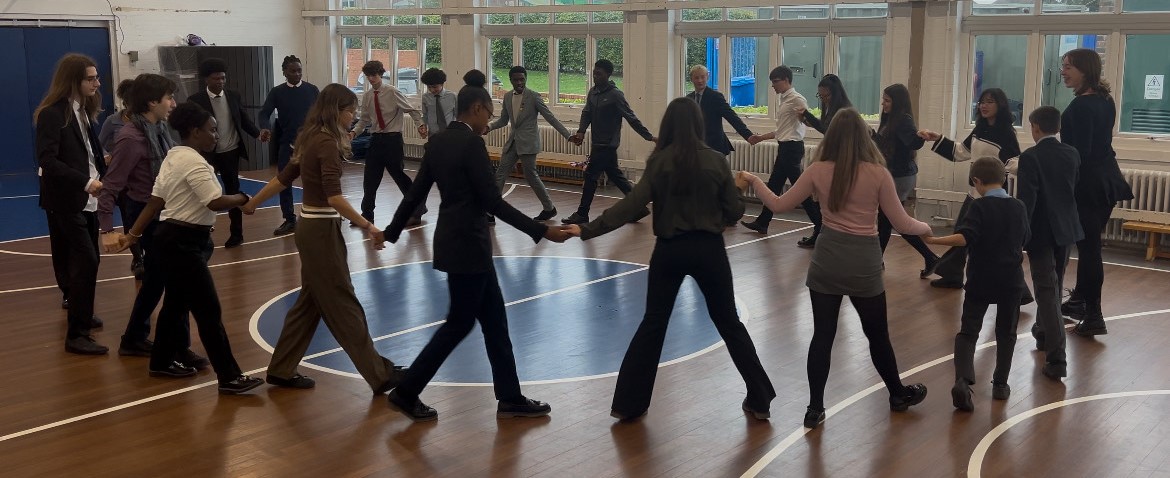
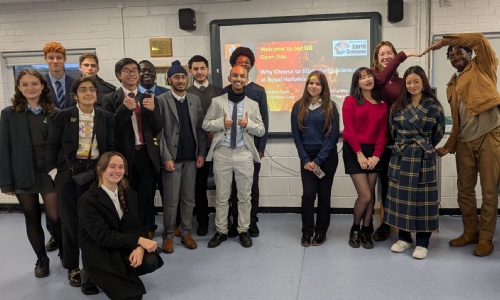
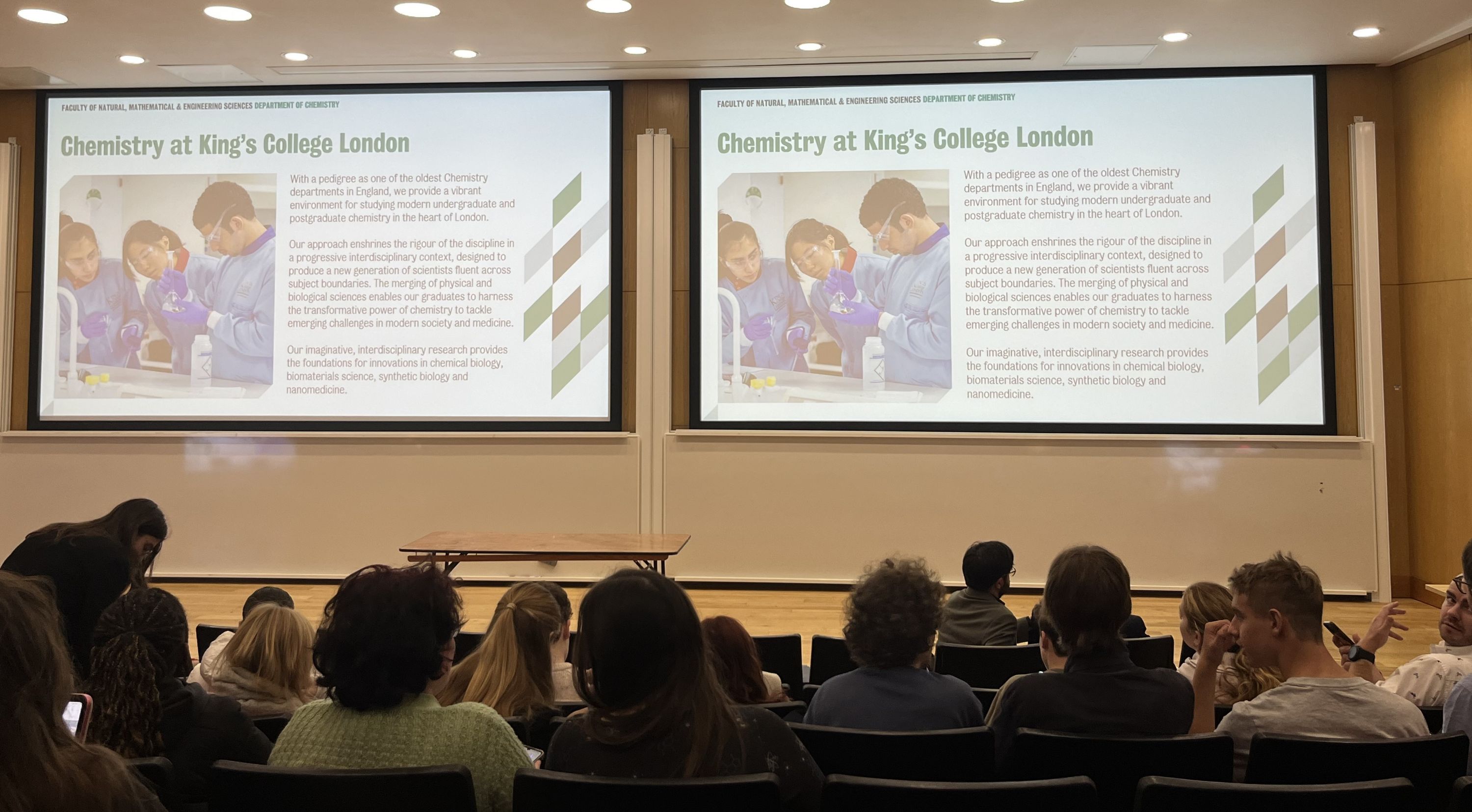
 Having the opportunity to attend Alexandra Quan’s talk about Earth Sciences at Royal Holloway was very inspiring. Since this course was something I had not previously heard of before, this was new information to me and was incredibly useful! We were enlightened about all the possible societies, trips (to Cyprus, Tenerife, etc.) and events associated with this university course, as well as university life in general. I have to say a massive thank you to Alexandra for her talk and all of her information today!! Especially since I am also doing Biology as one of my Higher Level subjects, seeing how Alexandra went to uni for this subject was something that definitely personally resonated with me.


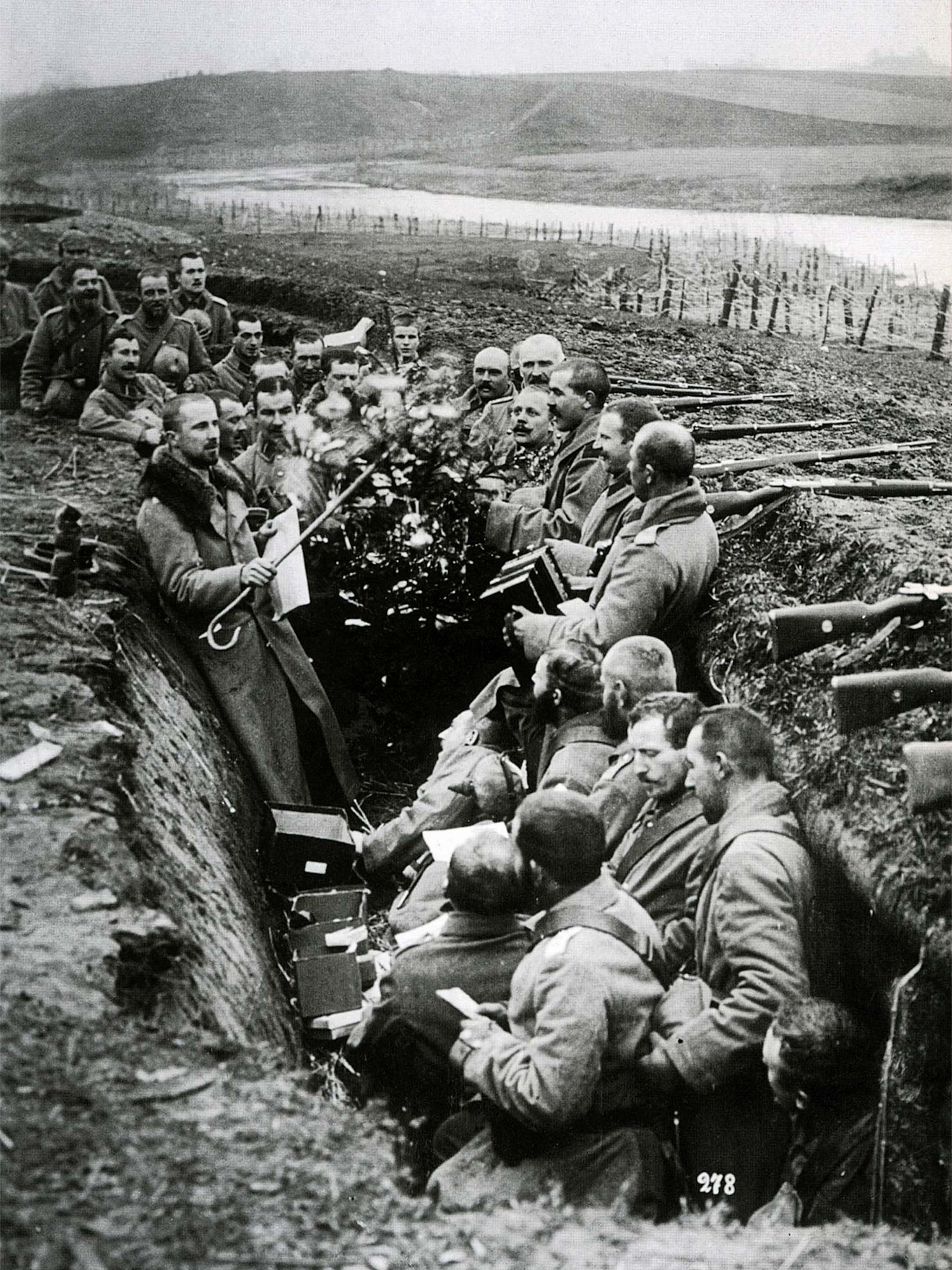 By Christmas, the soldiers on both sides were exhausted and weary of the constant warfare, with many of them having signed up in the early months & being excited by the opportunity to serve their country but now wanting to return home to their families and leave the damp and cold trenches where there was constantly the threat of having to go “over the top” into no man’s land and face almost certain death from enemy fire. The truce was spontaneous, and it began with German soldiers beginning to decorate their trenches with simple Christmas trees and to light candles and sing carols, and there were even some reports that the Germans began to shout across no man’s land, wishing the English “Merry Christmas” in broken English, and although British troops were initially hesitant they eventually began to sing Christmas carols in response being swept along by the mood of the Germans and thinking of loved ones back at home.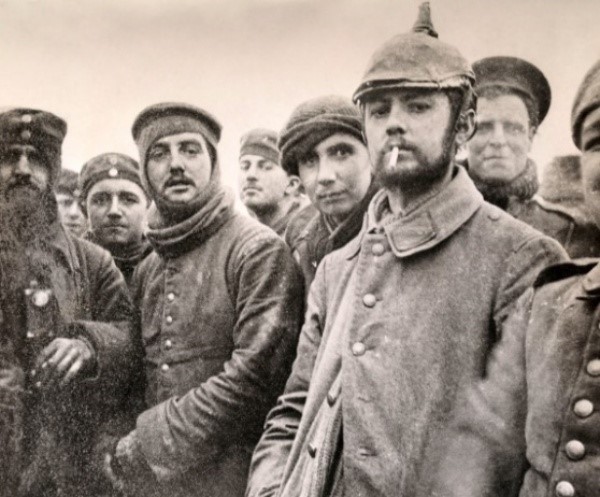
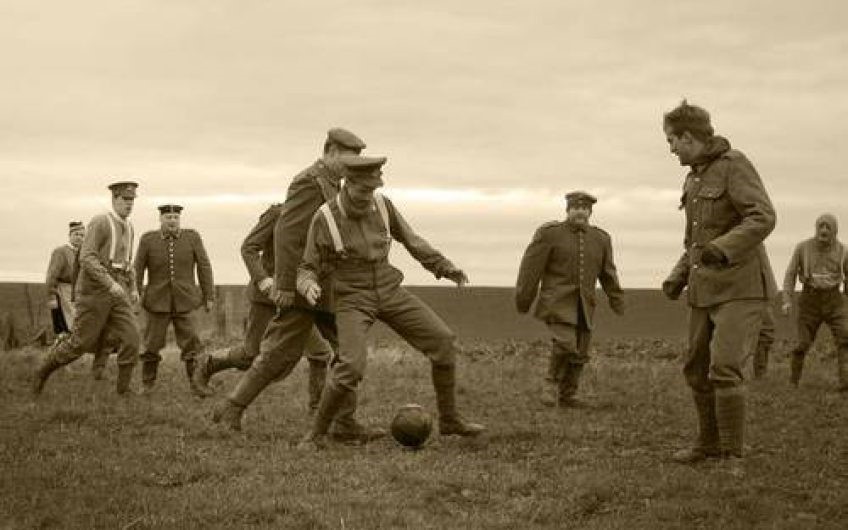
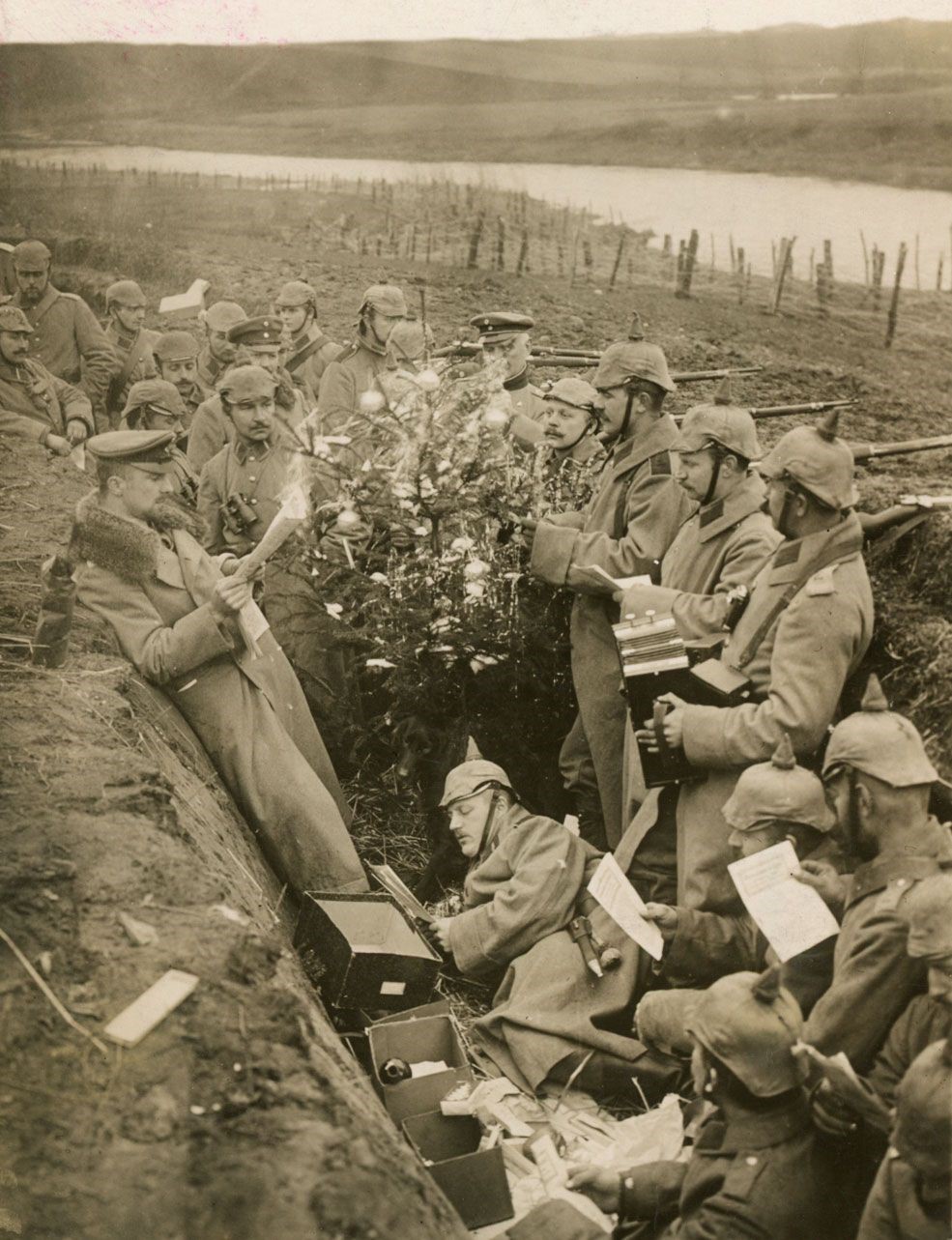 It is important to remember, however, that the truce was not universal along the whole of the front line and there were still areas along the front where fighting continued with commanding officers on both sides concerned that the truce would undermine their authority and the morale of the soldiers fighting in the war, and they were quite anxious that it should be brought to an end as quickly as possible. The truce where it took place did not last for a long time and in most cases, within one or two days it came to an end with soldiers being forced back into their trenches and fighting on the front line resuming. It did, however, have a lasting impact and for those soldiers who were involved it proved to be a very emotional experience as it raised questions about the futility of war & what they were fighting for, which became stronger as time passed.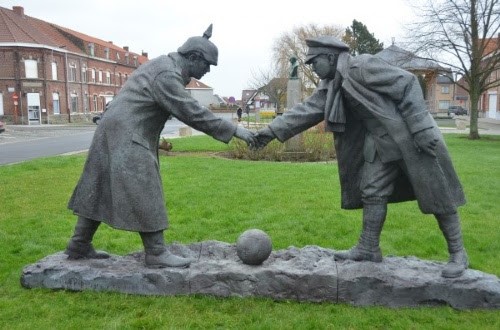


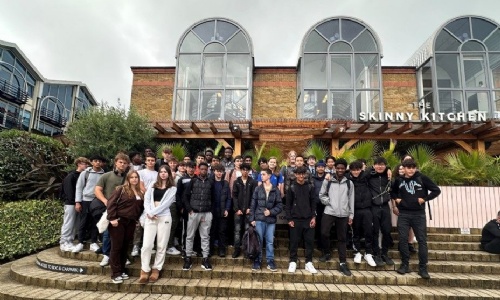
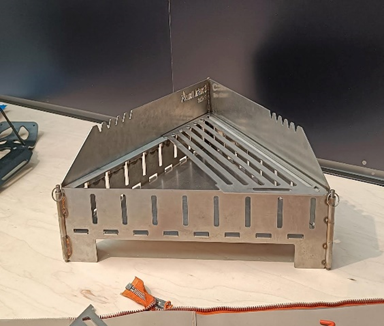 One of the first pieces that we saw was a portable, flat-pack grill for camping, where we got to speak with the designer and discuss his design process; he told us about his research into existing, portable grills and his dislikes with them, his initial design ideas, and even the history of grills and BBQs. His process was very similar to what we are currently doing in our NEA, and our conversation helped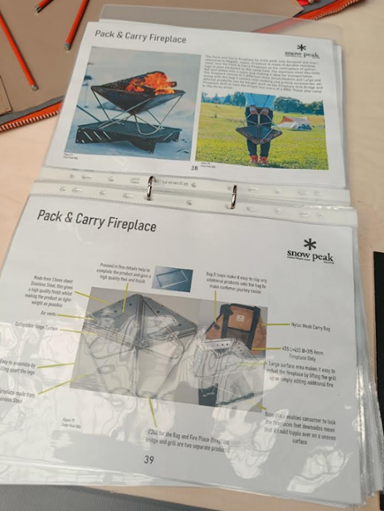
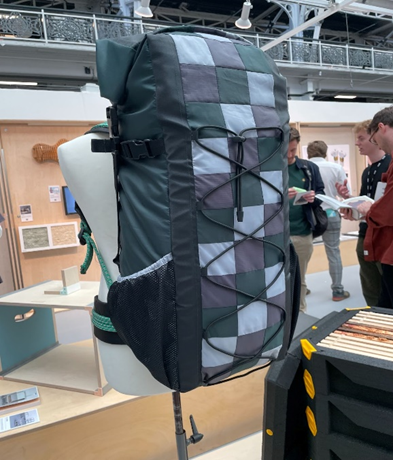 Another great design we saw was a camping bag. It was a good example of containers for our brief ‘Eating away from home’, and was very versatile. It could be collapsed into a small rucksack for things where you only need a packed lunch or something, or could be expanded to become a bag for larger things such as a sleeping bag or a tent. It was good to see that as a part of eating away from home counts as camping, and so allowed for some extra thought to that area.
 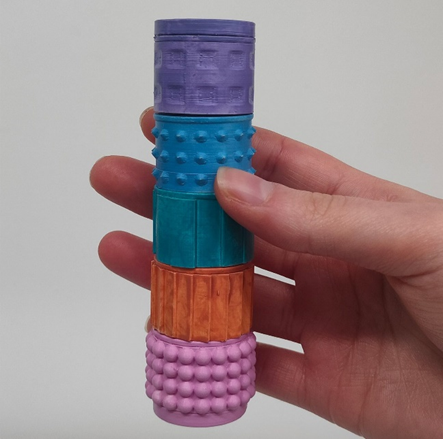 We also came across a design called Footer by Rebecca Brown, which is a sensory kit aimed at
  There were so many other amazing designs that we saw that couldn’t fit into this article, but overall, we all really enjoyed this experience, as we got the opportunity to see so many creative and unique designs to take inspiration from, and talked to a lot of aspiring designers who gave us some amazing advice for when we will also be designing our own products. It was really inspiring to see these designers talk about their creations with true passion for their work, and we would really like to visit another one of these exhibitions in our own time in the future